
What must remain human when AI can CREATE SOME OF THE work?
Designer · Design Educator · Researcher · Podcaster
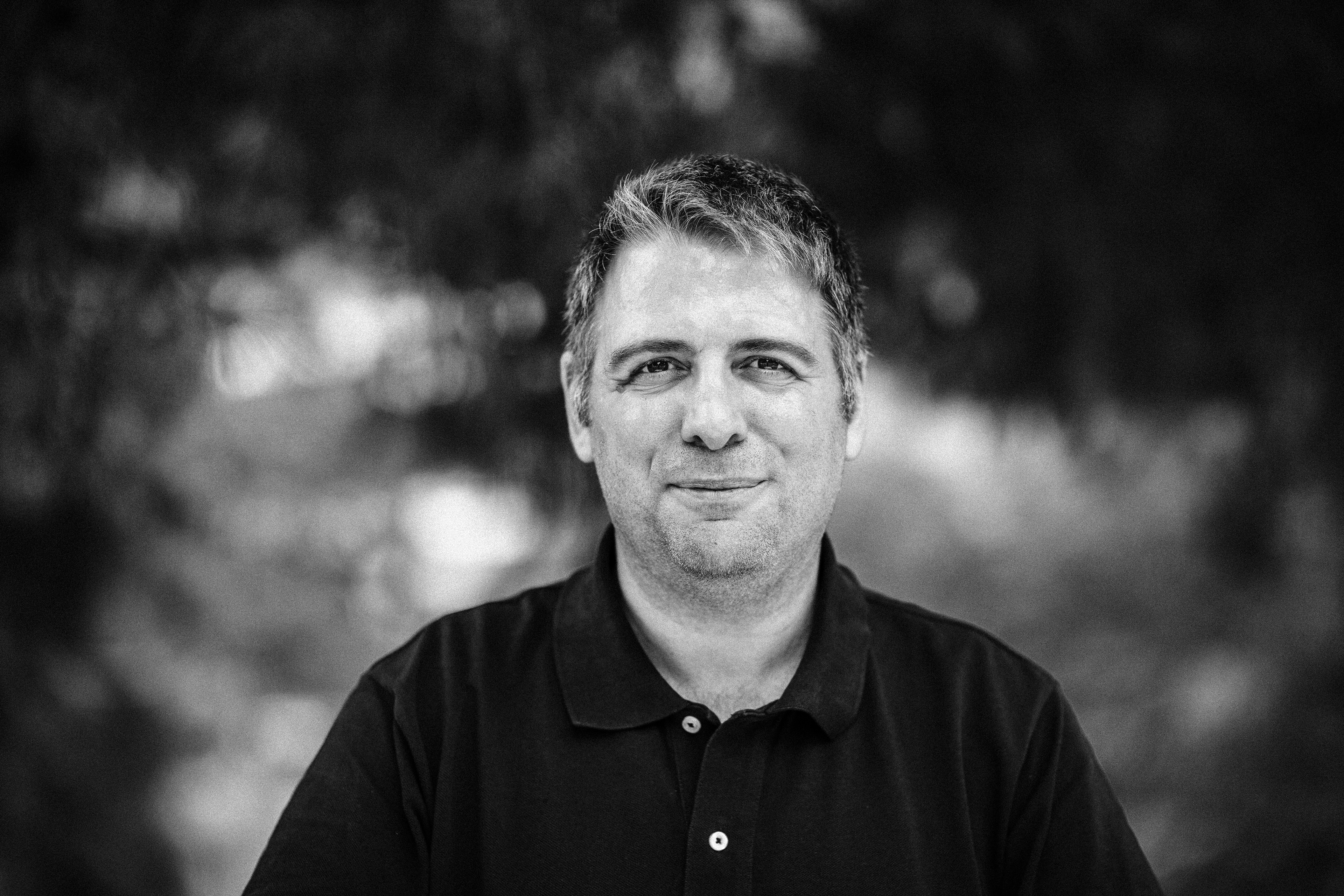
Lefteris Heretakis explores what happens to creativity, design and education when technology can increasingly produce the outcome for us. His work asks a more difficult question than whether we should use AI: What must human beings still learn to do for themselves?
Drawing on three decades of design practice, international education and more than 100 long-form podcast conversations, Lefteris speaks about creative judgement, making, studio culture, AI, professional practice and the future of learning.
Available for podcasts, long-form interviews, live conversations and panels.
Previous conversations
A conversation with Lee-Sean Huang exploring the challenges and opportunities facing contemporary design education. [Listen →]
A conversation about what design education is actually for when AI can generate polished creative work in seconds—and why formation matters more than output. [Listen →]
A conversation about what designers should be learning, the relationship between handcraft and digital craft, and the changing responsibilities of design educators. [Listen →]
A conversation about curiosity, uncertainty, creative independence and why students sometimes need to become comfortable with not knowing the answer. [Listen →]
Also read Rethinking How We Teach Design, based on the above conversation.
AI did not create the crisis in design education. It revealed it. For years, we have increasingly confused the production of polished outcomes with the development of the person capable of producing them. Now a machine can create the image, generate the presentation, write the rationale and imitate the portfolio. That makes a different set of questions urgent.
How does judgement develop?
What happens when students can produce before they can think?
What forms of creative friction should we deliberately preserve?
What is the studio actually for?
And if producing the work is becoming easier, what does it now mean to become a designer?
These questions sit at the centre of Lefteris's work.
Conversation themes
The Tool Must Not Think for You
What should remain human when AI can make the work?
AI can accelerate creative production enormously. But when technology begins completing the developmental process on our behalf, convenience can become dependency.
This conversation explores the difference between using AI to extend human capability and allowing it to replace the experiences through which judgement, curiosity and creative independence develop.
Possible directions: AI and creativity · design judgement · education · authorship · critical thinking · productive difficulty · the future of creative work
Making Is Thinking
Why the hand, eye and mind should never have been separated.
Drawing, making, observing and working through materials are often treated as preliminary activities before the “real” design begins.
Lefteris argues the opposite.
Making is not simply a way of executing an idea. It is one of the ways ideas are discovered.
This conversation examines what physical making contributes to cognition, observation, memory, judgement and creative development—and why these abilities may become more important, rather than less, in an increasingly automated culture.
Possible directions:
drawing · analogue and digital practice · craft · tacit knowledge · observation · creativity · learning through doing
drawing · analogue and digital practice · craft · tacit knowledge · observation · creativity · learning through doing
The Disappearing Studio
What do we lose when creative education becomes content delivery?
The art and design studio was never simply a room.
It was a social and intellectual ecology: people making alongside one another, looking over shoulders, arguing, experimenting, failing, observing, receiving criticism and gradually absorbing the culture of a discipline.
As education becomes increasingly individualised, screen-based and administratively structured, that ecology is disappearing.
This conversation asks what the studio actually does—and what cannot easily replace it.
Possible directions:
studio culture · community · critique · mentorship · universities · online learning · apprenticeship · creative education
studio culture · community · critique · mentorship · universities · online learning · apprenticeship · creative education
Industry Ready Is Not Enough
Should education prepare students for today's jobs—or for a lifetime of change?
The phrase “industry ready” sounds sensible until the industry itself changes faster than a degree can respond.
Software changes. Roles disappear. Junior pathways are automated. Entire production processes are reorganised.
Lefteris argues that education must do more than train students for today's job descriptions. It must develop adaptable people who can continue learning, questioning, making and exercising judgement throughout their lives.
Possible directions:
employability · junior creative roles · AI and work · portfolios · professional practice · higher education · lifelong learning
employability · junior creative roles · AI and work · portfolios · professional practice · higher education · lifelong learning
Ideas worth exploring
“The purpose of design education is not to produce design. It is to produce designers.”
“If the machine can produce the portfolio, the portfolio can no longer be the proof of education.”
“AI didn't create the crisis in design education. It revealed it.”
“Some friction is not inefficiency. It is where learning happens.”Lefteris is also the founder, producer and host of Design Education Talks, an international podcast devoted to the future of art and design education.
Across more than 100 episodes, he has spoken with designers, educators, researchers, creative leaders and practitioners about creativity, professional practice, technology, studio culture and how designers learn.
He has also produced and hosted the Designer Talks Podcast for the Chartered Society of Designers.
This experience means Lefteris approaches podcast conversations as conversations—not performances. He understands the role of the host, follows an idea rather than a script, and is comfortable with long-form discussion, disagreement and unexpected directions.
Questions we could explore
If AI can produce excellent design, what exactly should design schools be teaching?
Are we confusing polished outcomes with genuine learning?
How does a designer actually develop judgement?
What should students deliberately learn without AI?
Is creative friction necessary for learning?
Why does drawing still matter?
What happens when junior creative jobs disappear?
Can someone become an expert without passing through apprenticeship?
What have universities misunderstood about studio culture?
Why have portfolios become such an unreliable measure of creative ability?
Should design education prepare students for industry—or prepare them to change it?
What can analogue practice teach us in a digital culture?
What happens to creativity when everything becomes easier?
What should an art school look like in 2030?
What does it actually mean to form a designer?
About Lefteris
Lefteris Heretakis MA RCA is a designer, educator, researcher and podcaster whose work spans professional design practice and international higher education.
He has worked in visual communication since 1996 and studied Visual Communication at the Royal College of Art. His teaching and educational work has taken him across the UK, Europe and Asia.
In 2009 he founded The New Art School, an ongoing exploration of alternative approaches to art and design education centred on observation, studio culture, making and the relationship between hand, heart and eye.
He founded the Design Education Forum in 2019 and subsequently created Design Education Talks, bringing together international voices from professional practice and education to examine how art and design should be taught in a period of profound technological and cultural change.
His current work focuses particularly on the relationship between AI and human judgement, creative formation, studio culture, analogue and digital practice, and the future of design education.
Short bio for hosts
Lefteris Heretakis MA RCA is a designer, design educator, researcher and podcaster working at the intersection of creativity, education and technology. He is the founder of The New Art School and Design Education Forum and the host of Design Education Talks. His current work asks what must remain human in creative education when AI can increasingly produce the outcome for us.
Let's have a conversation
Lefteris is available for thoughtful long-form conversations about:
design · creativity · education · AI · learning · studio culture · professional practice · drawing and making · the future of creative work
If your audience is interested in what happens to human creativity when technology makes producing things increasingly easy, there is probably a conversation worth having.
Invite Lefteris to your podcast →
Thank you!